

Why Is the Modern Water Meter Becoming the Backbone of Smart Water Networks
Urban water management faces unprecedented challenges: aging infrastructure, non-revenue water losses, and demand for real-time consumption insights. At the center of this transformation lies one essential device—the water meter. Once a simple mechanical registrar, today's flow measurement instrument integrates digital intelligence, wireless communication, and advanced analytics. This article explores the technological shifts, implementation models, and strategic partnerships redefining the industry. We will also examine how manufacturing heritage combined with independent R&D drives sustainable innovation.
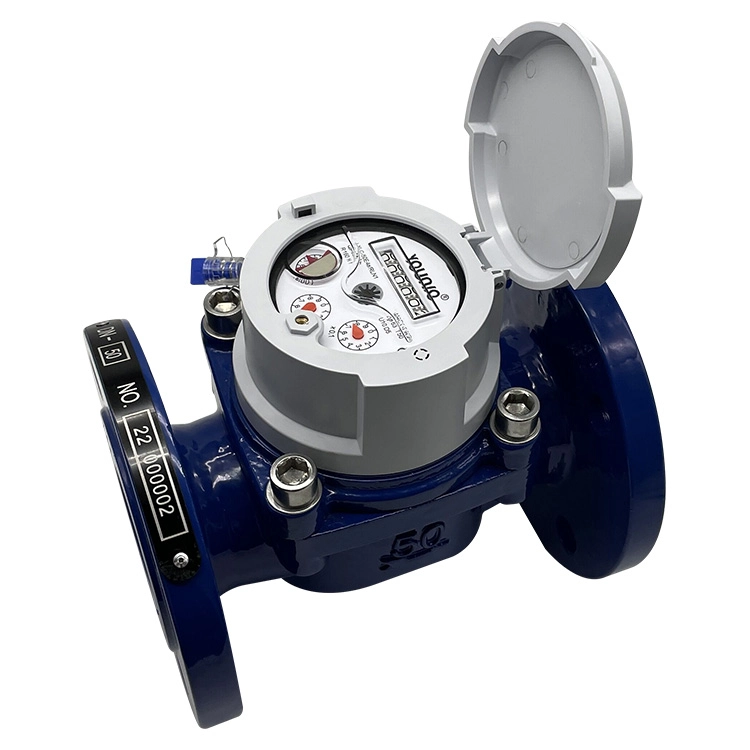
Key Drivers for Flow Measurement Upgrades
Several factors push utilities to replace legacy registers with intelligent systems. Below are the main catalysts without redundant listing:
- Leakage reduction: Real-time monitoring helps detect even small leaks instantly, saving millions of cubic meters annually.
- Operational efficiency: Remote data collection eliminates manual reading routes and billing estimation errors.
- Consumer empowerment: Granular usage patterns allow end users to modify behavior and reduce waste.
- Regulatory compliance: Many regions now mandate sub-daily metering data for large commercial accounts.
- Integration with SCADA: Flow data feeds into pressure management and network hydraulic models.
Thus, a modern water meter acts not merely as a measurement tool but as a sensing node within a digital ecosystem. This evolution demands new competencies from manufacturers, spanning electronics, radio frequency engineering, and cloud software.
From Mechanical to Smart: A Technological Progression
The journey can be divided into three generations. Each generation addresses specific limitations while introducing new capabilities.
1. Mechanical Era (Positive Displacement / Velocity Meters)
Reliable but limited to local display. Routine physical reading required. Susceptible to wear and accuracy drift over time. Suitable for low-budget environments but lacks remote visibility.
2. Electronic Conversion (AMR – Automatic Meter Reading)
Adds a pulse output or encoder register. Handheld or drive-by collectors retrieve data. Reduces manual effort but still requires proximity. Battery life starts to become an engineering focus.
3. Smart Connected Devices (AMI – Advanced Metering Infrastructure)
Full two-way communication via LPWAN (LoRaWAN, NB-IoT, LTE-M). Real-time consumption alerts, remote valve control, and firmware updates. The water meter now integrates with utility cloud platforms and analytics dashboards.
Core Components of an Intelligent Flow Device
Understanding the anatomy helps evaluate supplier capability. The table below compares critical subsystems without numeric data but with functional emphasis.
| Subsystem | Function | Material / Technology | Common Challenges |
|---|---|---|---|
| Base Mechanism | Primary flow sensing (mechanical or solid-state) | Brass, composite polymer, or stainless steel; ultrasonic transducers | Sediment interference, wear at high flow rates |
| Register & Electronics | Signal conversion, data storage, display | Non-magnetic sensors, Hall effect, or optical encoders | Humidity ingress, electromagnetic interference |
| Communication Module | Data transmission to concentrator or cloud | LoRa, NB-IoT, wireless M-Bus, or cellular | Coverage gaps, power consumption |
| Power Supply | Sustained operation over lifetime | Lithium-thionyl chloride batteries, energy harvesting | Capacity depletion in cold climates |
| Platform & Analytics | Data visualization, billing integration, alerts | Cloud-based or on-premise with API endpoints | Cybersecurity, scalability for millions of endpoints |
When selecting a supplier, examination of each subsystem's design and testing regime is essential. End-to-end ownership of these components often results in higher reliability and faster troubleshooting.
Deployment Models and Industry Best Practices
Utilities adopt different strategies based on density, budget, and long-term goals. Below are three typical deployment models:
- Hybrid approach: Smart devices in high-value commercial zones; mechanical registers for low-consumption residential clusters. This minimizes upfront capital while gathering strategic data.
- Full district-based AMI: All meters within a pressure zone replaced with smart endpoints. Ideal for rigorous non-revenue water management and active leak localization.
- Pay-as-you-go prepaid: Common in emerging markets. The flow measurement device includes a valve and user interface, improving revenue collection and affordability.
Each model demands rigorous testing for electromagnetic compatibility, environmental sealing, and long-term accuracy. Independent certifications (MID, OIML R49, NSF/ANSI 61) are non-negotiable for international tenders.
Challenges in Large-Scale Metering Projects
Despite clear benefits, many initiatives encounter obstacles. Recognizing these pitfalls ensures better planning.
- Infrastructure compatibility: Older pipe materials and non-standard fittings may require adapters or full replacement.
- Data management overload: A single utility can generate billions of readings per year; scalable cloud architecture is mandatory.
- Cybersecurity threats: Unencrypted radio links or default credentials invite manipulation. End-to-end encryption and secure element chips are now standard.
- Battery longevity: Cold environments or frequent transmissions reduce operational life. Low-power design and adaptive transmission intervals help.
- Workforce training: Staff accustomed to mechanical devices need upskilling in data analytics and network troubleshooting.
Proactive planning and partnership with experienced manufacturers mitigate these risks. A reliable water meter partner offers more than hardware—it provides technical support, installation guidance, and after-sales monitoring.
Regional Adoption Patterns and Standards
Global trends reveal different acceleration speeds. Europe leads in standardization, with the Smart Water Networks Forum (SWAN) promoting interoperability. The Middle East invests in high-accuracy meters for desalinated water. Asia-Pacific shows rapid growth, especially in China and India, where smart city projects include universal metering. Latin America and Africa adopt prepaid solutions to reduce revenue leakage. Across all regions, a common requirement emerges: the meter must operate reliably for a decade without maintenance.
Additionally, communication protocols such as DLMS/COSEM, OMS, and MQTT are increasingly specified in tenders. Suppliers that support open standards avoid vendor lock-in and simplify future upgrades. Consequently, the choice of a water meter supplier directly affects the total cost of ownership over a fifteen-year horizon.
The Role of Vertical Integration in Quality Assurance
Manufacturers that design and produce core components in-house achieve tighter quality control. Instead of assembling third-party registers, electronic boards, and enclosures, vertically integrated factories optimize each interface. Benefits include:
- Faster root-cause analysis for field failures
- Reduced supply chain delays
- Customization for specific water chemistry (high salinity, aggressive pH)
- Consistent firmware updates across different meter sizes
This approach is especially valuable for smart projects, where hardware and software must evolve together. Independent design of communication equipment and platform systems ensures seamless data flow from the sensor to the billing engine. Such synergy lowers integration efforts for the utility and improves long-term reliability.
Industry Outlook: What Lies Ahead for Flow Measurement?
The next five years will witness convergence with artificial intelligence and digital twins. Edge computing within the meter will pre-process data, transmitting only anomalies or aggregated values. Self-diagnostic features will predict calibration drift and recommend servicing. Furthermore, water quality sensors (turbidity, chlorine, pH) may become integrated into the same body, turning the device into a multi-parametric station. As connectivity costs decline, even rural systems will afford real-time monitoring. Ultimately, the industry will move from reactive maintenance to predictive and prescriptive operations. For manufacturers, continuous investment in electronics moulding, software development, and security certification will separate market leaders from followers.
Strategic Partnership and Long-Term Commitment: The Younio Model
Within this dynamic landscape, a company with deep roots and a forward-looking strategy stands out. Wenling Younio Water Meter Co., Ltd. was established in 2011, yet its predecessor—Zhejiang Younio Water Supply Equipment Co., Ltd.—began operations in 1983. This heritage represents four decades of exclusive dedication to flow measurement devices. The transition from mechanical to smart meters was not a sudden shift but a gradual, internally driven evolution. Younio independently designs every critical layer: the base mechanism, electronic mould, communication equipment, and the cloud platform system. Such vertical integration ensures compatibility and performance across the entire data chain.
Notably, in 2011, Wenling Younio entered a definitive agreement with a controlling shareholder, positioning the enterprise for a future public listing. This strategic move combines financial robustness with manufacturing depth. The factory spans more than five thousand square meters and employs over one hundred fifty skilled professionals, with an annual production capacity exceeding two million units. Export reach extends to more than forty countries, and the majority of production serves overseas markets. Beyond hardware, Younio delivers a complete intelligent water service system—from planning and design through engineering implementation and operational service. The guiding principle of “intelligent connection, win-win cooperation” reflects a commitment to co-creating value with utilities worldwide. As the industry continues to embrace smart infrastructure, such integrated specialists are poised to lead the next generation of water measurement solutions. Their blend of historical expertise, independent R&D, and global orientation provides a reliable anchor in a rapidly changing field.
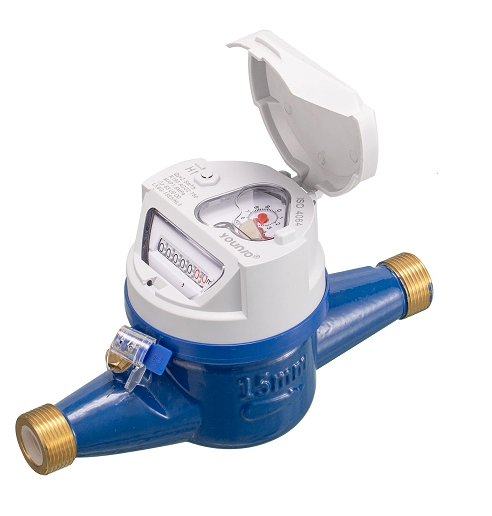
Conclusion
The modern flow measurement device has transcended its original role. It is now a gateway to data-driven water conservation, efficient revenue management, and network resilience. Whether deploying in a dense metropolitan district or a rural supply zone, the selection criteria must include long-term accuracy, communication robustness, and supplier stability. The shift from mechanical to connected meters is irreversible, and utilities that adopt early will gain significant operational advantages. By understanding technology roadmaps, avoiding common deployment pitfalls, and partnering with vertically integrated manufacturers, the water sector can secure a sustainable and intelligent future. In this journey, the humble water meter becomes a powerful instrument of change—measuring not only volume but also value for generations to come.